
Fernando de Noronha Travel Guide: how to plan your trip and build the ideal itinerary
By Danilo Dire · Updated November 17, 2026 · 27 min
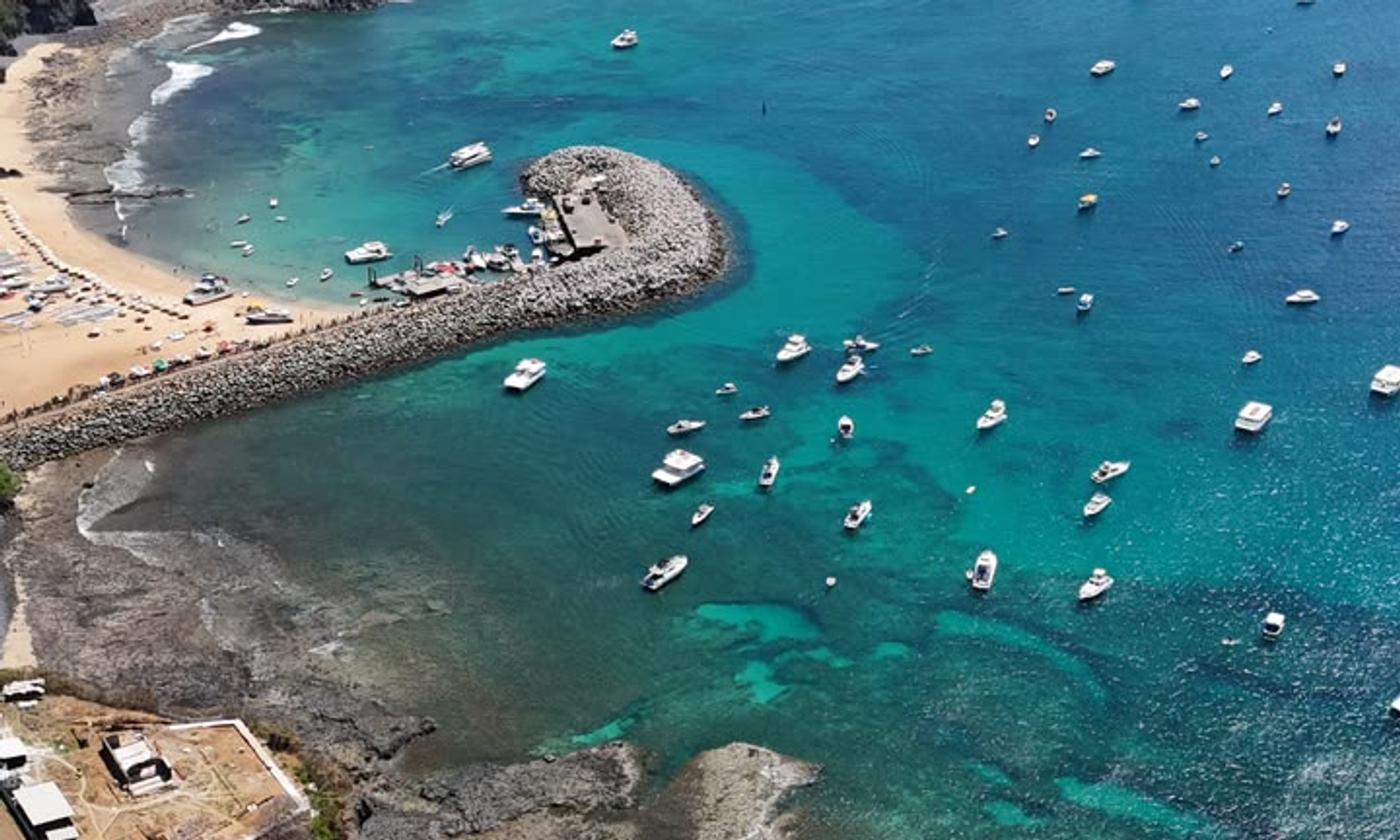
A complete guide to planning Fernando de Noronha: when to go, how many days to stay, how to fit tides and sea conditions into your itinerary, what the 2026 fees cost and which tours to do each day.
August to October has the calmest sea, but every season has its own way to enjoy Noronha. Stay 5 days, pay the TPA and the National Park ticket before you travel, check the tide table and book boat tours and diving at the start or middle of the trip, never on the last day.
Fernando de Noronha is a volcanic archipelago in the state of Pernambuco, in the middle of the Atlantic Ocean. Regular access is by plane, and the experience on the island depends on something few beach destinations require: understanding tides, sea conditions and the rules of the National Marine Park before you arrive. Travelers who plan in that order get more out of the island, lose fewer days and slot each tour into the right time.
This guide covers the essentials: the best time to go, how many days to stay, ready-made 3, 5 and 7-day itineraries, how to use the tide table, how much the fees cost in 2026, which tours to prioritize and what is not allowed on the island.
Decision
Quick summary
Best time for calm seas
August, September and October, after the rainy season: calm inner sea, no swell, ideal for every tour
Wave season
November to March: enjoy the calm between swells and move boat tours earlier when needed
Rainy season
March to June: a flexible itinerary and, often, beautiful rainbows
How many days
5 days is the best balance; 7 days give room for rest and rescheduling
First day
Arrival and sunset at the beaches near the village
First tour
Ilha Tour, to get to know the island and decide where to return
Critical planning
Tide table, National Park ticket and bookings
Golden rule
Boat trips and diving at the start or middle of the trip, never on the last day
Where Fernando de Noronha is and how to get there
The archipelago has 21 islands and islets, but all tourist infrastructure is on the main island: the airport, guesthouses (pousadas), restaurants, villages, beaches reachable by land and Porto de Santo Antônio, where the sea activities depart.
Regular tourist access is by plane, and flight routes change throughout the year. Before buying, check the routes available on your exact travel dates. The step-by-step is in our guide on how to get to Fernando de Noronha.
Two details that help with planning:
- Time zone: Noronha is 1 hour ahead of Brasília.
- Flight time: since most people arrive during the day, arrival day fits better with check-in, lunch and sunset than with a long tour. That is why our itineraries start this way. If you arrive early, though, you may have other options, explained further below.
Mar de Dentro and Mar de Fora
You will hear these two terms all the time. Mar de Dentro (the inner sea) is the side facing the mainland, with beaches such as Conceição, Cacimba do Padre, Boldró and Sancho. Mar de Fora (the outer sea) faces the open ocean, with areas such as Atalaia, Leão and Sueste.
The division matters because wind and swell change from one side to the other. On the same day, one beach may be perfect for snorkeling while another calls for more caution. That is why itineraries with clear priorities and some flexibility work better in Noronha than rigid schedules.
Why Noronha is a World Natural Heritage Site
Together with Atol das Rocas, Fernando de Noronha has been recognized by UNESCO as a World Natural Heritage Site since 2001. The region is essential for feeding and reproduction of marine species and is home to oceanic birds, turtles and a resident population of spinner dolphins.
Much of the archipelago lies inside the Fernando de Noronha National Marine Park, managed by ICMBio. This explains the fees, bookings and visiting rules. They exist to keep the island open to visitors.
When is the best time to visit Fernando de Noronha?
In Noronha, nature is in charge. Each time of year has its own character, and in every season there is a way to enjoy the island. Knowing what to expect helps you build the right itinerary, not talk yourself out of the trip.
Period
What it is usually like
How to make the most of it
August to October
After the rainy season: calm inner sea, no swell
The ideal season for every tour: Ilha Tour, Traditional Boat Tour, Entardecer VIP, Hawaiian Canoe, Water Bike, diving, private speedboat, Natural Pools Circuit and trails. High demand: book in advance
November to March
Wave (swell) season
Swells don’t last all the time: you may arrive as one is leaving or catch the calm between two. If the forecast shows a swell coming in, move boat tours earlier and adapt your itinerary
March to June
Rainy season
Fit tours in between rainy spells and keep the itinerary flexible. We like to joke that it’s the season of the most beautiful rainbows
One rule applies in any month: sea-dependent activities at the start or middle of the trip, with spare days to reschedule. Whatever the season, there is always an alternative to enjoy the island. See the month-by-month calendar in best time to visit Fernando de Noronha.
Want to dive? Think visibility, not just sunshine
For diving, what matters is the condition underwater. A beautiful day on the surface does not always bring the best visibility, and operators assess current, wind and the most suitable site for each diver’s level.
An important rule: do not book scuba diving on the day of your return flight. Always follow the operator’s guidance on the interval between your last dive and boarding.
How many days should you stay in Fernando de Noronha?
Three days is the minimum for a taste. Five days is the best balance for a first trip. Seven days give a complete, unhurried experience.
The difference is not just the number of tours. It is the room to reschedule. If the boat tour doesn’t depart on the only day reserved for it, a short trip may have no other window. In seven days, your itinerary has breathing room. More details in how many days to stay in Fernando de Noronha.
3-day itinerary: the essentials
Day
Plan
Why
1
Arrival, check-in and sunset at the beaches near the village
Makes the most of arrival day without rushing
2
Shows the island’s main spots in one day
3
Hawaiian Canoe or Water Bike in the morning
A short tour, at the time dolphins usually show up, compatible with your flight
It works best with an early arrival. If you can, extend to five days.
5-day itinerary: the best balance for a first trip
Day
Morning
Afternoon
1 – Arrival
Arrival and check-in
Sunset at the beaches near the village, such as Conceição, Praia do Meio and Praia do Cachorro
2 – Ilha Tour
Shared Ilha Tour or Private Ilha Tour
Until late afternoon (the private tour runs until sunset)
3 – Sea
Free morning
Entardecer VIP: boat with underwater board ride and barbecue on board at sunset
4 – Diving
Free afternoon
5 – Dolphins
Hawaiian Canoe or Water Bike, early, to try to see the dolphins
Farewell
Why this plan works:
- Day 1: arrival day becomes a sunset instead of a rushed tour. See the best spots in sunrise and sunset in Fernando de Noronha. If your flight lands early, see the alternatives right below.
- Day 2: doing the Ilha Tour early builds your “mental map” of the island. You find out which beaches you want to revisit on your free days.
- Day 3: the free morning balances the trip. In the afternoon, the Entardecer VIP combines scenery, underwater board ride, snorkeling and the sunset seen from the sea.
- Day 4: the dive stays well away from flight day, and the free afternoon is for resting.
- Day 5: spinner dolphins usually arrive in the port area around 7 a.m. and stay for a few hours. The Canoe and the Water Bike depart right in that window. Sightings depend on nature and are never guaranteed, but it is the best time to try.
Arriving early? Your first day can be a tour day
A sunset at the beaches near the village is the default plan for arrival day, but it isn’t a rule. If you land early, you can use the afternoon for a tour, and for travelers with only a few days on the island that is a real advantage: one more day of experiences.
Option for your arrival afternoon
When it makes sense
Entardecer VIP sunset boat tour (shared, R$ 330, boarding 2:40–3:00 p.m.)
To start your trip seeing the island from the sea, with the underwater board, barbecue and sunset
Private speedboat in the afternoon (2:30 p.m. until sunset), with Baía do Sancho or in the port area
If you want exclusivity from day one. The Baía do Sancho option requires the National Park ticket
Trilha do Piquinho at sunset (R$ 220)
To end your first day watching the sunset from above
Natural Pools Circuit in the afternoon (R$ 280)
When low tide falls in the early or middle afternoon
A booked National Park trail
If you got an ICMBio slot for your arrival date
When the tide decides for you. Sometimes the first day isn’t just an option: it’s your best chance. If low tide falls in the early or middle afternoon on the day you arrive, it’s worth doing the tide-dependent tour right then, such as the Natural Pools Circuit. Since the tide comes about an hour later each day, leaving it for later may mean catching low tide in the late afternoon, with little light, or after dark. The tide table section below shows this with an example.
7-day itinerary: Noronha with room for everything
In one week, you do the full 5-day itinerary and can also fit in:
- Trilha do Piquinho in the late afternoon (R$ 220 per person), to watch the sunset from above. The trail is in the Complexo do Sancho. See more in Fernando de Noronha trails.
- Natural Pools Circuit at low tide, according to the tide table for your dates.
- One of the National Marine Park trails, if you manage to book it. Places are controlled by ICMBio, so try to book as soon as your dates are set.
This format is ideal for families, couples celebrating a special date and those who don’t want to wake up early every day. It also handles rescheduling best: if a sea tour needs to change days, you move it without upending the whole trip.
The tide table shapes part of your itinerary
In Noronha, the tide is not a detail. It defines whether a natural pool is accessible, whether a rocky stretch is safe and at what time each experience makes sense. The practical rule:
- Low tide: natural pools, rocky circuits and some coastal trails.
- High tide: diving and snorkeling usually perform better.
The official references are the tide table from the Brazilian Navy Hydrography Center, which has a specific forecast for the Fernando de Noronha Archipelago, and the ICMBio page on the National Park website. Guides and operators use this forecast together with real observation of the sea.
Understand the tide in one minute
Many people have never had to check a tide table before a trip. In Noronha it pays to learn the basics, because they change your itinerary:
- The sea rises and falls twice a day. There are two high tides and two low tides every day, about six hours apart.
- Low tide is when the pools appear. The sea pulls back and the natural pools show up. Locals call it “maré seca” (dry tide).
- The time moves every day. Each tide comes about an hour later than the day before. Today’s 2 p.m. low tide will be close to 3 p.m. tomorrow.
- The table shows time and height. Next to each time is the water height in meters. The lower the low-tide number, the further the sea pulls back.
An example to picture it (illustrative times, not from the real table):
Day of your trip
Afternoon low tide
For the natural pools
Day 1 (arrival)
2 p.m.
Sun high: great timing
Day 2
around 3 p.m.
Still good
Day 3
around 4 p.m.
Late afternoon approaching
Day 4
around 5 p.m.
Light already fading
Day 5
around 6 p.m.
Close to dark: no good
In this example, the other low tide each day falls in the middle of the night, so it doesn’t help. Anyone who left the pools for the end of the trip would miss low tide in good daylight. That’s why the tide table decides which day of your trip each tour fits, and why it’s worth building your itinerary with the tide table for your dates in hand.
How to read the tide table easily
- Find the day of the activity.
- Check the time of the lowest tide.
- Confirm with the operator the safe entry and exit window.
- Don’t set the time based only on your own reading: sea conditions and visiting rules also count.
A low tide at 10 a.m. doesn’t mean arriving at the pool at 10 a.m. The group may need to start walking earlier, enter during a controlled window and leave before the water rises.
Atalaia pool: the best example of why planning matters
The Atalaia natural pool forms at low tide and has controlled visitation. Access requires booking with ICMBio, and sunscreen is prohibited. Swimming is cleared daily depending on sea conditions, and inside the pool a life jacket, mask and snorkel are mandatory.
In Noronha, some experiences run on fixed time slots, not spontaneous stops.
Fernando de Noronha fees in 2026
There are two different charges, and both go into your budget. We explain them in detail in the post on Fernando de Noronha fees.
Charge
2026 amount
How it works
TPA (Environmental Preservation Fee)
R$ 105.79 (1 day) · R$ 520.50 (5 days) · R$ 672.85 (7 days)
Charged by length of stay, paid on the official Noronha Administration portal. Adjusted every year
National Marine Park ticket
R$ 196.50 (Brazilians) · R$ 393 (foreigners), since Nov 1, 2026
Valid for 10 days, purchased at tickets.parnanoronha.com.br
The park ticket is separate from the TPA and gives access to the park’s visiting areas. It does not include services such as guides, transport, diving or boat tours. Some exemptions exist. Check the current rules on the official website before buying.
What is inside the National Park?
Among the best-known spots are Baía do Sancho, Baía dos Porcos, Baía dos Golfinhos, Praia do Leão, Baía do Sueste and trail and pool circuits. Some have extra access control and require booking.
Sort out your ticket and bookings at the start of the trip.
👉 Talk to EmNoronha on WhatsApp and build your itinerary in the right order, with each tour on its best day.
The main tours in Fernando de Noronha
There is no “mandatory” tour for everyone. The ideal combination depends on your trip profile.
Tour
Duration
Best for
Depends on sea or tide?
Ilha Tour
Full day
First trip
Slightly
Entardecer VIP
Afternoon until sunset
Couples, friends, a special end of day
Yes
Traditional Boat Tour
Morning
Coastal scenery, snorkeling at Sancho
Yes
Hawaiian Canoe
2 hours
Sunrise and dolphins
Yes
Water Bike
About 1 hour
A light activity that’s easy to fit in
Yes
Scuba diving
Varies
Marine life
Yes
Natural Pools Circuit
According to the tide window
Natural pools
Very much
Private speedboat
About 4 hours
Exclusivity and groups
Yes
Ilha Tour in Fernando de Noronha: the island tour to start with
The Ilha Tour covers the island’s main spots in a 4x4 vehicle, between beaches and viewpoints, such as Praia do Leão, Baía do Sueste, Baía do Sancho and its viewpoint, Mirante dos Dois Irmãos, Baía dos Porcos, Cacimba do Padre, the port area and Fortinho do Boldró. The order varies by day.
- Shared Ilha Tour: R$ 280 per person, departing in the morning and returning around 5 p.m.
- Private Ilha Tour: R$ 1,200 for 2 people, at the time you choose and until sunset.
The National Park ticket is mandatory, and lunch is not included. Learn more in our Ilha Tour guide.
Sunset boat tour: Entardecer VIP with underwater board and barbecue
The Entardecer VIP (R$ 330 per person) departs from Porto de Santo Antônio between 2:40 and 3 p.m. and lasts until around 6:15 p.m. It includes the underwater board ride, a cruise along the Mar de Dentro beaches to Cacimba do Padre, with views of Morro Dois Irmãos and Morro do Pico, and then anchoring near the port with barbecue on board, snorkeling, a water slide and the sunset seen from the sea. It does not require the National Park ticket.
Morning boat tour: Traditional Boat Tour
The Traditional Boat Tour departs in the morning and passes Baía dos Porcos, Baía dos Golfinhos and Ponta da Sapata, with about 40 minutes of snorkeling at Praia do Sancho. It costs R$ 280 per person on the schooner or R$ 350 on the catamaran. It pairs very well with the Entardecer VIP: one shows the island in the morning, the other closes the day.
Hawaiian canoe in Fernando de Noronha: paddling at sunrise
The Hawaiian Canoe departs from the Porto de Santo Antônio area at two morning times, 5:30–7:30 a.m. and 8:30–10:30 a.m. Both have the same chance of dolphins. Group paddling and the quiet early-morning sea make it one of the most memorable experiences on the island. More in Hawaiian Canoe in Fernando de Noronha.
Water bike in Fernando de Noronha: short and easy to fit in
The Water Bike (R$ 220 per person) is a bicycle on floats for pedaling on the sea at Porto de Santo Antônio. It lasts about 1 hour, with departures every hour from 7 a.m. It is easy to combine with the beach, lunch or another tour in the port area.
Scuba diving in Fernando de Noronha: discovery dive or certified dive
If you have never dived, you do a discovery dive with an instructor. If you are certified, you do a certified diver dive.
- Discovery Dive by Boat: R$ 1,150 per person. About 20 minutes by catamaran to the secondary islands, up to 12 m deep and 30 to 40 minutes underwater.
- Discovery Dive from the Beach: R$ 490 per person.
- Certified Diver – Beach: R$ 450 per person.
- Certified Diver – Boat: from R$ 900 per person.
See the differences in our Fernando de Noronha diving guide.
Natural Pools Circuit in Fernando de Noronha
The Natural Pools Circuit (R$ 280 per person) visits Buraco do Galego and Lasca da Velha and takes place at low tide. The advantage of going with a guide is not having to guess the right window: the guide adjusts the time and sequence to the day’s sea and shows where to step and what must not be touched. More in the post on the natural pools circuit.
Trilha do Piquinho: the sunset from above
The Trilha do Piquinho (R$ 220 per person) is part of the Complexo do Sancho and ends at one of the most beautiful viewpoints for the sunset. It is the ideal way to close a free day. Discover other options in Fernando de Noronha trails.
Baía do Sancho: set time aside for it
Baía do Sancho has been named the best beach in the world 7 times in TripAdvisor’s “Best of the Best”. By land, access involves a 320 m trail and a 208-step staircase between the rocks. The staircase is open from 8 a.m. to 6 p.m., with alternating down and up times:
Time
Staircase
8:00–8:50 a.m.
Open (down and up)
9:00–10:20 a.m.
Down only
10:30–11:20 a.m.
Up only
11:30 a.m.–12:20 p.m.
Down only
12:30–1:20 p.m.
Up only
1:30–2:20 p.m.
Down only
2:30–3:20 p.m.
Up only
3:30–4:20 p.m.
Down only
4:30–5:20 p.m.
Open (down and up)
5:30–6:00 p.m.
Up only
Stop at the viewpoint first: the view from above is part of the experience. Full guide in Baía do Sancho.
Private boat tour in Fernando de Noronha: with or without Baía do Sancho
There are two ways to take a private boat tour in Fernando de Noronha, and the difference is whether you enter the National Park.
- Private speedboat with Baía do Sancho (enters the National Park): The Premium Private Speedboat (R$ 6,200 for 2 people) and the Classic Private Speedboat (R$ 4,950 for 2 people) follow the same route, with R$ 300 per additional person. They leave from Porto de Santo Antônio, pass the Mar de Dentro beaches, Baía dos Porcos, Baía dos Golfinhos and Ponta da Sapata, and end with 30 to 40 minutes of snorkeling in Baía do Sancho. Departures from 8:30 a.m. to 12:30 p.m. or from 2:30 p.m. until sunset. The National Park ticket is required.
- Private speedboat in the port area (does not enter the National Park): The Private Speedboat sails the environmental protection area, with no National Park ticket required, and includes the underwater board and a barbecue. It costs R$ 2,600 for 2 people (the price varies with the size of the boat), with departures from 9 a.m. to 1 p.m., the best chance to see dolphins, or from 2:30 p.m. until sunset.
Projeto Tamar
The Tamar Visitor Center, in the Boldró area, is a great plan for early evening or for a time that doesn’t depend on the sea. Besides its content on sea turtles, it helps you understand why touching or chasing animals has a real impact. Learn more about Projeto Tamar in Fernando de Noronha.
What to pack for Fernando de Noronha
- Light, quick-dry clothes: you’ll switch between beach, boat and trail on the same day.
- UV-protection shirt: essential on long tours and at pools where sunscreen is prohibited.
- Sneakers or sturdy shoes: for trails and rocks.
- Flip-flops for the beach and short trips.
- Two swimsuits, so you always have a dry one.
- Reusable bottle and small backpack.
- Waterproof phone case for boat, canoe and beach.
- Power bank.
Full list in what to pack for Fernando de Noronha.
How to get around the island
BR-363 is the island’s main road. The public bus covers much of it and is the most economical option. Taxis work well for one-off trips, and a rented buggy or car gives more freedom.
Run the numbers once your itinerary is set. Since the Ilha Tour, Entardecer VIP, diving and Canoe already have defined departure points, renting a buggy for the whole trip may cost more than renting only on free days. See the options in how to get around Fernando de Noronha.
Where to watch the sunset and sunrise
The sun sets on the Mar de Dentro side. Cacimba do Padre, Boldró, Conceição, Praia do Meio, Praia do Cachorro and the port area are among the classic spots, plus the Entardecer VIP, which shows the sunset from the sea, and the Trilha do Piquinho, which shows it from above. Mix it up: over five afternoons, watch it from a beach, a viewpoint, a bar and the sea.
Sunrise is quieter, and the best way to reward an early start is the 5:30 a.m. Hawaiian Canoe. Details in sunrise and sunset in Fernando de Noronha.
Where to eat
Eating out takes a big bite of the budget, so it pays to alternate special dinners with simple options: pay-by-weight buffets (self-service), kiosks and snacks at the port between tours. Some restaurants work better with a reservation in high season. A practical tip: if you’ll already be at the port in the late afternoon, having dinner there saves a trip back and forth to the pousada. Our recommendations are in where to eat in Fernando de Noronha.
What is not allowed in Fernando de Noronha
Situation
Correct behavior
Why
Dolphins
Watch from a distance. Chasing, touching or swimming toward them is prohibited (Law 7.643/1987)
Protects the animals’ natural behavior
Turtles
Don’t touch, feed or block their path
A R$ 10,000 fine has already been issued for touching a turtle
Natural pools
Follow each pool’s rules. At Atalaia, sunscreen is prohibited
Enclosed water is sensitive to contamination
Trails
Stay on marked paths and follow booking rules
Protects vegetation, wildlife and you
Drones
Inside the National Park, only authorized scientific research. Outside it, personal use under ANAC and DECEA rules. Commercial filming requires authorization
It’s a federally protected area
Trash
Take back everything you brought
The island has limited logistics
A wild animal is still wild, even when it tolerates people nearby. In a destination visited by thousands, an exception repeated hundreds of times stops being an exception.
How much does a trip to Fernando de Noronha cost?
There is no single number. So split your budget into blocks:
Block
What to include
Getting to the island
Flights and connections
Fees
TPA (by length of stay) and National Park ticket
Accommodation
Pousada, in a location that suits your itinerary
Tours
Ilha Tour, boat, diving, canoe, pools
Local transport
Bus, taxi or rental
Food
Alternate special and simple meals
Full cost breakdown in how much a trip to Fernando de Noronha costs.
Tour agency in Fernando de Noronha: why book with EmNoronha
Once your flights and accommodation are booked, one key question remains: who should you book your tours with? When your itinerary involves tides, the National Park, boats, diving and different time slots, the value of a local agency lies in making all the pieces fit, not just in selling tours.
EmNoronha has been a tour agency and operator in Fernando de Noronha for more than 10 years:
- No. 1 in Fernando de Noronha on TripAdvisor for several years, rated 4.9 with more than 1,200 reviews, and more than 120,000 travelers served.
- A physical store at Porto de Santo Antônio, where the boat tours depart.
- Our own equipment: our own cars for the Ilha Tour, our own Hawaiian canoes, our own water bikes and our own 36-foot speedboat for up to 15 people.
- Partners in the Entardecer VIP boat.
But our greatest asset is the dreams of everyone who comes to Noronha. We serve with love, care and purpose.
👉 Talk to our team on WhatsApp and get an itinerary built for your dates, with each day’s tide and sea conditions.
Checklist before you fly
- Confirm flights and the actual arrival time
- Pay the TPA on the official portal
- Buy the National Park ticket
- Check whether any trail or pool requires booking
- Look up the tide table for your dates
- Book sea-dependent tours first
- Don’t schedule scuba diving on your flight day
- Pack a UV shirt, trail shoes and a phone case
- Leave at least one free period
Frequently asked questions about Fernando de Noronha
When is the best time to go to Fernando de Noronha?
It depends on what you’re looking for. August, September and October, after the rainy season, bring the calmest inner sea with no swell: the ideal season for every tour. November to March is the wave season, but swells come and go and you can move boat tours earlier. March to June is the rainy season: with a flexible itinerary, you’ll often see beautiful rainbows. Every season has its own way to enjoy the island.
How many days are enough to see Fernando de Noronha?
Five days is the best balance for a first trip. Three days show the essentials but leave little room to reschedule. Seven days let you add trails, natural pools and free days without rushing.
What should I do on my first day in Fernando de Noronha?
In most cases, after check-in, enjoy the sunset at the beaches near the village, such as Conceição, Praia do Meio and Praia do Cachorro. If you arrive early, you can do an afternoon tour: the Entardecer VIP, a private speedboat, the Trilha do Piquinho at sunset or, if low tide falls in the early or middle afternoon, the Natural Pools Circuit. Save the first long tour, such as the Ilha Tour, for the next day.
Do you have to pay to enter Fernando de Noronha?
Yes. The TPA is charged by length of stay (R$ 105.79 for one day in 2026). The National Marine Park ticket, R$ 196.50 for Brazilians and R$ 393 for foreigners, is valid for 10 days and charged separately.
What is the best time to see dolphins?
Spinner dolphins usually arrive in the port area around 7 a.m. and stay for a few hours. The Hawaiian Canoe (5:30–7:30 a.m. or 8:30–10:30 a.m.) and the Water Bike (hourly departures from 7 a.m.) make the most of that window. Sightings depend on nature and are never guaranteed.
Can I use sunscreen in the natural pools?
Not at the Atalaia pool: sunscreen is prohibited. On those days, use physical protection such as a UV shirt and a cap.
Which tour should I do on my last day?
Something short in the morning that fits your flight time, such as the Hawaiian Canoe or the Water Bike. Avoid scuba diving on flight day and don’t leave boat tours or tide-dependent trails for the last day.
Is the Ilha Tour worth it if I rented a buggy?
Yes. The buggy gives freedom, and the Ilha Tour adds a guide, local context and a ready-made sequence of the main spots. Done early, it helps you use the buggy with more purpose in the following days.
How does the tide table work in Fernando de Noronha?
The sea rises and falls twice a day, and each tide comes about an hour later than the day before. The natural pools appear at low tide, so its timing decides which day of your trip that tour fits best. Check the Brazilian Navy tide table for your dates and confirm the time window with your tour operator.
Conclusion: in Noronha, planning gives you freedom
Fernando de Noronha doesn’t run by the clock alone. Tides, waves, wind and park rules are part of the trip. Planning well doesn’t mean locking down your itinerary: it means securing what depends on timing, putting sea tours early and leaving room to return to your favorite beach or stop for one more sunset.
If your first trip includes a good overview of the island, at least one experience at sea, a respectful encounter with marine life and unhurried time, you’ll understand why Noronha is unlike anywhere else in Brazil.